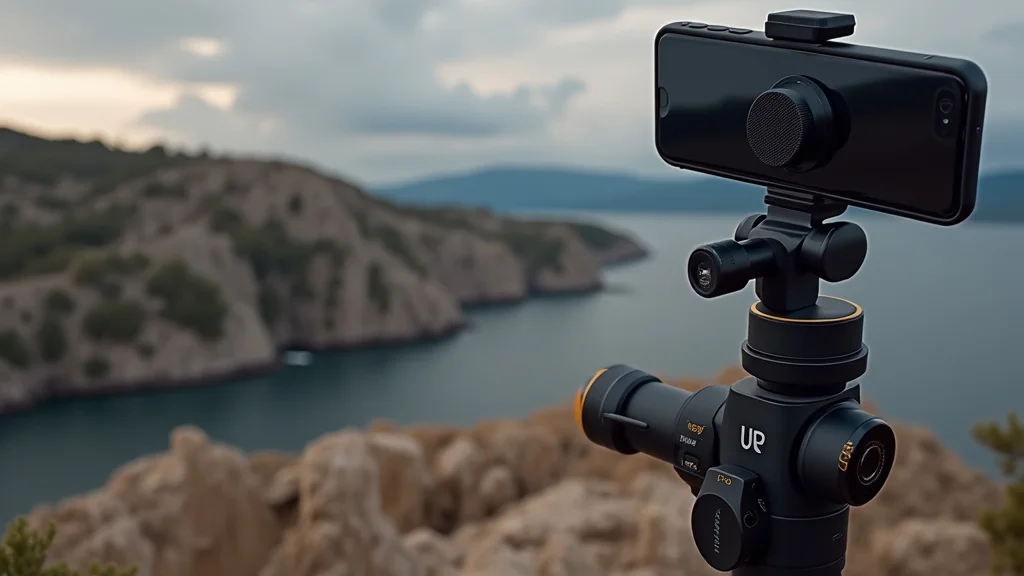
Picking the best cell phone gimbal might seem a bit tricky when you’re just starting. There are so many options and features to think about. But don’t worry, it’s not as hard as it looks!
We’ll walk you through it step by step, making it super simple to find the perfect gimbal for your phone. Get ready to shoot smoother videos like a pro.
Key Takeaways
- You will learn what makes a cell phone gimbal great for smooth video.
- Discover the key features to look for when choosing a gimbal.
- Understand different types of gimbals and their uses.
- See real-world examples of how gimbals improve video quality.
- Learn how to set up and use your gimbal effectively.
Choosing Your Best Cell Phone Gimbal
A cell phone gimbal is a tool that helps you capture incredibly smooth video. Think about recording a walk or a chase scene; without a gimbal, your footage would be shaky and hard to watch. A gimbal uses motors and sensors to keep your phone steady, no matter how much you move.
This makes your videos look professional, like something you’d see in a movie. For beginners, the variety of choices can be overwhelming. Do you need one with more motors?
What’s a payload capacity? These questions can stop you before you even start. This guide aims to simplify that.
We will break down what matters most when you search for the best cell phone gimbal.
What is a Gimbal and How Does It Work?
At its core, a gimbal is a device designed to stabilize moving objects. For cameras, especially smartphone cameras, this means eliminating unwanted shake and jitters. It achieves this through a system of motors and gyroscopes that constantly adjust to counteract movement.
Imagine holding your phone and trying to walk smoothly; your natural steps introduce up-and-down and side-to-side motions. A gimbal detects these tiny movements almost instantly.
These movements are then sent to small electric motors attached to different axes of the gimbal. There are typically three axes: pitch, roll, and yaw. The pitch axis controls up-and-down tilting, like looking at the sky or the ground.
The roll axis manages side-to-side tilting, keeping the horizon level. The yaw axis handles left-and-right panning, like turning to look around.
When your phone starts to tilt or move unexpectedly, the motors work in reverse to keep the phone’s camera facing the intended direction. This continuous, minute correction process results in footage that appears remarkably stable, even when the person holding the gimbal is moving significantly. This technology is what transforms casual smartphone videos into polished productions.
The Role of Motors and Sensors
The magic behind a gimbal lies in its sophisticated motors and sensors. High-quality gimbals use brushless motors. These motors are known for their precision, speed, and quiet operation.
They are powerful enough to handle the weight of most smartphones and their accessories while being responsive enough to make rapid adjustments.
Sensors, such as gyroscopes and accelerometers, are the brains of the operation. Gyroscopes detect rotational movements – how the phone is tilting or turning. Accelerometers measure linear acceleration, or how the phone is moving in a straight line.
These sensors provide constant data about the phone’s orientation and movement in space. This data is fed to a control board, which then instructs the motors on how to react.
The speed and accuracy of these sensors and motors are critical. A faster response time means less time for shaky footage to be recorded. Some advanced gimbals even use AI algorithms to predict movement patterns and make proactive adjustments, further enhancing stability.
The interplay between these components is what allows a gimbal to maintain a steady shot, even during dynamic actions like running or riding a bike.
Stabilization Axes Explained
Understanding the axes of stabilization is key to appreciating how gimbals work and why certain models perform better. Most modern smartphone gimbals offer three-axis stabilization, which is essential for comprehensive stability.
Pitch Axis: This axis controls the up-and-down movement. It allows your phone to tilt forward or backward. For instance, if you are walking downhill, the pitch motor will work to keep your phone level, preventing the shot from pointing too far down.
Likewise, walking uphill, it prevents the shot from pointing too far up.
Roll Axis: This axis controls the side-to-side tilt, also known as “roll.” It’s crucial for keeping your horizon straight. If you accidentally tilt your hand to the left or right, the roll motor will counteract this, ensuring that the horizon in your video remains parallel to the bottom of the frame. This is especially important for cinematic shots where a level horizon is desired.
Yaw Axis: This axis manages the left-and-right panning motion. When you turn your body to look around, the yaw motor will smoothly follow your movement, creating a fluid pan. This is vital for capturing sweeping landscapes or following a subject as they move across the scene without the jerky camera movements typical of handheld recording.
The combination of these three axes working together creates a truly stable recording platform. Without all three, your videos might still exhibit some level of shake or unwanted motion. Therefore, when looking for the best cell phone gimbal, always prioritize three-axis stabilization.
Key Features To Consider For Your Best Cell Phone Gimbal
When you’re in the market for a best cell phone gimbal, a few features stand out as particularly important. These are the elements that will directly impact the quality of your videos and the ease of your user experience. Don’t get bogged down by technical jargon; focus on what these features mean for your shooting.
Payload Capacity
Payload capacity refers to the maximum weight a gimbal can comfortably support and stabilize. This is a critical spec because if your phone plus any accessories (like a lens attachment or a microphone) exceeds the gimbal’s payload, it won’t be able to stabilize effectively. The motors will struggle, leading to shaky footage or even the gimbal shutting down.
For most standard smartphones, the payload capacity of a gimbal is usually sufficient. However, if you plan on using larger phones, phones with heavy cases, or external accessories, you need to check this specification carefully. A gimbal with a higher payload capacity offers more flexibility and future-proofing.
For example, a gimbal rated for 200 grams might struggle with a large flagship phone and a clip-on wide-angle lens. However, a gimbal with a 300-gram capacity would likely handle this setup with ease. Always check the manufacturer’s specifications for both your phone and the gimbal to ensure compatibility.
This prevents disappointment and ensures you get the best possible performance.
Here’s a quick look at typical payload ranges:
| Gimbal Type | Typical Payload Capacity | Best For |
|---|---|---|
| Compact/Mini Gimbals | 150-250 grams | Lightweight smartphones, casual filming |
| Standard Gimbals | 250-400 grams | Most smartphones, medium-sized accessories |
| Pro/Advanced Gimbals | 400+ grams | Larger phones, heavy lens setups, action cameras |
Battery Life and Charging
The battery life of your gimbal is essential for extended shooting sessions. If your gimbal dies halfway through an important event or trip, it’s useless. Most modern gimbals offer several hours of continuous operation on a single charge.
Look for gimbals that advertise at least 8-12 hours of battery life. Some higher-end models can even last up to 15-20 hours, which is fantastic for full-day shoots or travel. Also, consider how the gimbal is charged.
Many gimbals now support fast charging, allowing you to get a significant amount of power in a short time. This is invaluable if you forget to charge it overnight or need a quick boost before heading out.
Some gimbals also have the ability to act as a power bank, charging your phone while you film. This is a fantastic feature if your phone battery tends to drain quickly, especially when using the camera extensively. Check the specifications to see if this is supported and what the charging output is.
Consider these points for battery performance:
- Continuous Run Time: How long can it operate on a full charge? Aim for 8+ hours.
- Charging Time: How quickly can it be recharged? Fast charging is a big plus.
- Power Bank Functionality: Can it charge your phone? This extends your overall shooting time.
- Replaceable Batteries: Some professional gimbals allow you to swap batteries, offering unlimited shooting potential if you carry spares.
Build Quality and Portability
The materials used to construct a gimbal and its overall design significantly affect its durability and how easy it is to carry around. Most gimbals are made from lightweight yet strong materials like aluminum alloys or high-quality plastics. A well-built gimbal will feel sturdy in your hands and be able to withstand minor bumps and drops.
Portability is also crucial, especially if you plan to travel or hike with your gimbal. Many gimbals are designed to be foldable, making them compact enough to fit into a backpack or even a large pocket. Some come with dedicated carrying cases, offering protection and making them easy to transport.
Consider the weight of the gimbal itself. A lighter gimbal will be less fatiguing to hold for extended periods. Also, think about the setup process.
Some gimbals have quick-release plates that make attaching and detaching your phone fast and simple. Others might require a bit more time to balance, which is the process of adjusting the arms so your phone is perfectly centered and ready to go.
Here are some aspects to look at for build and portability:
- Materials: Look for aluminum alloys or durable composites for longevity.
- Foldability: Does it fold down for compact storage?
- Weight: A lighter gimbal is easier to handle on long shoots.
- Carrying Case: Does it include a case for protection during transport?
- Ergonomics: How comfortable is it to hold and operate?
Connectivity and Smart Features
Modern gimbals often connect to your smartphone via Bluetooth or a direct cable. This connection allows for advanced control features and smart shooting modes. Many gimbals come with dedicated mobile apps that unlock a wealth of creative possibilities.
These apps can offer features like:
- Object Tracking: The gimbal automatically follows a chosen subject, keeping it in focus and centered in the frame. This is perfect for filming sports, pets, or moving people.
- Panorama Modes: Capture stunning wide-angle panoramas with automated stitching.
- Time-Lapse and Hyperlapse: Create dynamic time-lapse videos, with hyperlapse adding movement to the sequence.
- Gesture Control: Some gimbals can be controlled with simple hand gestures, allowing for hands-free operation.
- Customizable Controls: Adjust motor sensitivity, speed, and response curves for personalized shooting.
The quality and stability of the app’s connection are important. A laggy or unreliable connection can be frustrating. Also, check if the app supports your specific smartphone model and operating system (iOS or Android).
Some apps even allow you to control camera settings like focus and zoom directly from the gimbal’s controls, streamlining your workflow.
The technology behind these smart features involves sophisticated software algorithms running on the gimbal’s internal processor, communicating with the app on your phone. This allows the gimbal to interpret your commands or detect subjects and translate them into smooth camera movements. It’s this integration that truly elevates smartphone videography.
Types of Gimbals For Your Best Cell Phone Gimbal Choice
Not all gimbals are created equal. They come in different forms, each suited for specific needs and shooting styles. Understanding these differences will help you pick the best cell phone gimbal for your personal requirements and budget.
Single-Axis vs. Three-Axis Gimbals
The most significant distinction in gimbal technology is the number of axes they stabilize. Single-axis gimbals are the most basic and typically only stabilize one plane of motion, usually the roll axis. This means they can keep your horizon level but won’t correct for up-and-down or left-and-right movements.
Three-axis gimbals, as discussed earlier, offer stabilization across pitch, roll, and yaw. This comprehensive stabilization is what provides the smooth, cinematic footage that gimbals are known for. For most users looking to significantly improve their video quality, a three-axis gimbal is the clear choice.
Here’s a simple comparison:
| Feature | Single-Axis Gimbal | Three-Axis Gimbal |
|---|---|---|
| Stabilization | 1 Axis (usually roll) | 3 Axes (pitch, roll, yaw) |
| Video Smoothness | Limited improvement | Significant improvement, cinematic quality |
| Price | Lower | Higher |
| Best Use | Basic horizon leveling | All types of video, dynamic movement |
While single-axis gimbals are cheaper, they are generally not recommended for anyone serious about videography. The difference in performance between a single-axis and a three-axis gimbal is substantial. Investing in a three-axis gimbal from the start will save you from needing to upgrade later.
Handheld Gimbals
These are the most common type of gimbals. They are designed to be held and operated by one person, with controls typically integrated into the handle. Handheld gimbals are versatile and can be used for a wide range of filming scenarios, from vlogging and travel videos to documentary filmmaking.
They usually feature a three-axis stabilization system and often come with a companion app for advanced features. Many handheld gimbals are also foldable, making them easy to carry. The best handheld gimbals offer a balance of performance, portability, and features, making them a popular choice for creators of all levels.
Consider these factors for handheld gimbals:
- Ergonomics: How comfortable is the grip for long periods?
- Weight Distribution: Is the weight balanced well when your phone is mounted?
- Button Placement: Are the controls intuitive and easy to reach?
- App Integration: Does the companion app offer useful shooting modes and controls?
Gimbals with Advanced Features
Beyond basic stabilization, many gimbals offer advanced features that can significantly enhance your videography. These often come with a higher price tag but can be worth it for serious creators.
Intelligent Tracking: This feature uses AI to identify and follow a subject automatically. You can select a person, a pet, or even an object, and the gimbal will keep it centered in the frame as it moves. This is incredibly useful for filming dynamic scenes without needing a second person to operate the camera.
Cinematic Modes: Some gimbals have pre-programmed movement patterns designed to create specific cinematic effects. These might include:
- Dolly Zoom: A classic effect where the background appears to expand or contract while the subject stays the same size.
- Motionlapse: A time-lapse where the gimbal moves slowly, creating a dynamic, flowing sequence.
- Spiral or Orbit Mode: The gimbal moves in a circular path around the subject, creating an impressive 360-degree shot.
These intelligent modes are often accessed through the gimbal’s mobile app and can be a fantastic way to add a professional touch to your videos with minimal effort. The algorithms behind these modes are complex, analyzing the gimbal’s current position and intended movement to execute these sophisticated camera paths. This allows even beginners to achieve visually striking results.
Using Your Best Cell Phone Gimbal Effectively
Once you have your best cell phone gimbal, learning to use it properly is key to unlocking its full potential. It’s not just about attaching your phone and hitting record; a little technique goes a long way.
Balancing Your Gimbal
Before you even turn on your gimbal, you need to balance it. This is arguably the most important step. Balancing ensures that the gimbal’s motors don’t have to work too hard to counteract gravity, which leads to smoother footage, better battery life, and prevents motor strain.
The process usually involves these steps:
- Mount your phone: Securely attach your smartphone to the gimbal’s phone holder.
- Adjust the roll axis: Ensure your phone stays level when you release it. You might need to adjust the clamp that holds your phone.
- Adjust the pitch axis: Make sure your phone doesn’t tilt forward or backward on its own. This usually involves sliding the phone holder forward or backward on its arm.
- Adjust the yaw axis: This is typically the last step. You want your phone to stay put when you gently pan it left or right. This might involve sliding the entire arm assembly on the base.
Each axis needs to be balanced individually. When balanced correctly, your phone should remain in whatever position you place it without drifting down or up. Many gimbals have markings on the arms to help you remember your phone’s balanced position if you switch it out.
A well-balanced gimbal will feel effortless. The motors will hum quietly, and the phone will appear suspended. If you hear straining sounds or see the phone struggling to hold position, it’s not balanced properly.
Taking the time to balance your gimbal every time you attach a different phone or even adjust a lens will dramatically improve your video quality.
Basic Shooting Techniques
With your gimbal balanced and your phone mounted, it’s time to start shooting. The goal is to move with the gimbal, not against it. Think of the gimbal as an extension of your arm, smoothing out your natural movements.
- Walk Smoothly: Bend your knees slightly when walking. This acts as a natural shock absorber. Avoid stiff-legged steps.
- Keep a Steady Grip: Hold the gimbal handle firmly but not rigidly. Your grip should be relaxed to allow the gimbal to do its work.
- Smooth Panning and Tilting: When you need to pan left or right, or tilt up or down, use the joystick on the gimbal handle for gentle, controlled movements. Avoid jerky thumb movements.
- Avoid Sudden Stops: Try to avoid abrupt stops and starts. Gradually slow down or speed up your movements for more fluid transitions.
- Low Angles: Experiment with shooting from low angles. Gimbals are excellent at keeping the camera steady even when you’re bending down.
Imagine you are carrying a tray of drinks; you would move carefully to avoid spilling them. Apply that same principle to your movements when filming with a gimbal. The less jarring input you give the gimbal, the smoother your footage will be.
Leveraging Smart Features
Once you’ve mastered the basics, explore the smart features your gimbal offers. These can elevate your videos significantly.
Object Tracking: This is a fantastic tool. Simply open the companion app, select the subject you want to track (often by drawing a box around it on your screen), and the gimbal will automatically keep it in frame. This is perfect for documenting activities or capturing interviews where the subject might move around.
Time-Lapse and Hyperlapse: For time-lapses, set up your gimbal on a stable surface and let it record over a period. Hyperlapse adds motion by moving the gimbal slightly between shots. This can capture the passage of time in a visually engaging way, like clouds moving across the sky or traffic flowing through a city.
Panorama Modes: If your gimbal has this feature, use it to capture stunning landscapes. The gimbal will take multiple photos from different angles and then stitch them together into a seamless panoramic image. This is a great way to showcase vast scenes that a single photo can’t capture.
Don’t be afraid to experiment with these features. Most apps have tutorials or guides to help you get started. The more you use them, the more comfortable you’ll become, and the more creative your videos will be.
Real-Life Examples and Scenarios
Seeing how others use gimbals can provide inspiration and practical tips. Here are some scenarios where a best cell phone gimbal truly shines.
Scenario 1: Traveling Blogger
Maya is a travel blogger who wants to capture her adventures in exotic locations. She used to film with just her phone, and while the content was good, the shaky footage made it look amateurish.
After getting a foldable handheld gimbal, Maya’s videos transformed. While walking through bustling markets, hiking mountain trails, or riding on a bumpy train, her footage remained incredibly steady. She used the object tracking feature to follow her dog as it explored a beach, creating a delightful clip.
The gimbal also made her talking-head segments much more engaging, as she could move around freely while her face stayed perfectly centered and stable in the frame.
Her subscribers noticed the difference immediately, commenting on the professional look of her new videos. The gimbal allowed her to tell her stories more effectively, making her viewers feel like they were right there with her.
Scenario 2: Family Videographer
David wants to capture precious family moments without the blur and shake associated with trying to film while chasing his kids. Before, his videos of birthday parties or park outings were hard to watch.
With his new gimbal, David can now record his children’s soccer games or playful moments in the backyard with smooth, cinematic quality. He found the hyperlapse feature particularly useful for capturing the entire duration of his child’s dance recital, condensing hours into a short, engaging video. He also uses the simple pan and tilt controls to follow his kids as they run and play, ensuring he doesn’t miss any of the action.
His family albums are now filled with high-quality memories that are enjoyable to rewatch.
Case Study: Improving Product Demos
A small e-commerce business was struggling to create effective video demonstrations for their handmade crafts. Their handheld videos were wobbly, making it difficult for potential customers to see the intricate details of their products. This led to fewer sales and a higher return rate.
They invested in a mid-range handheld gimbal and trained their staff on basic balancing and smooth movement techniques. The results were dramatic. Product videos became much clearer and more professional.
Customers could easily see the texture, stitching, and overall quality of the items. The ability to smoothly pan around the products and zoom in on specific features, all while keeping the item sharp and stable, significantly boosted buyer confidence. Within three months, their online sales increased by 20%, and product return rates decreased by 15%.
This demonstrates how even a simple tool like a gimbal can have a significant impact on business success by improving the quality of visual content. The technical aspect of stabilization directly translated into a better customer experience and improved sales metrics.
Common Myths Debunked
There are a few common ideas about gimbals that aren’t quite right. Let’s clear them up.
Myth 1: Gimbals are only for professionals
This used to be true, but not anymore! Today’s gimbals are designed for everyone, from casual users to seasoned filmmakers. Many are affordable, easy to set up, and come with intuitive apps that guide you through advanced features.
You don’t need a film degree to make great-looking videos with a gimbal.
Myth 2: Gimbals are too complicated to use
While there’s a learning curve, modern gimbals are much simpler than they seem. The balancing process, once mastered, becomes quick. Companion apps often have helpful tutorials, and the basic operation of panning and tilting is very straightforward.
Most users find they are comfortable with the core functions within a few hours of practice.
Myth 3: My phone’s built-in stabilization is good enough
Most smartphones have digital or optical image stabilization, which helps, but it’s not the same as a gimbal. Gimbals use physical motors to counteract movement, offering a much higher level of stability, especially during complex motions or fast pans. This physical stabilization is superior for creating truly cinematic footage.
For example, while phone stabilization might smooth out a gentle walk, it often struggles with jogging or quick turns, whereas a gimbal excels.
Myth 4: Gimbals make your videos look unnatural
When used correctly, gimbals create a more natural and pleasing viewing experience by removing distracting shake. They mimic smooth camera movements that are pleasant to watch. If a gimbal makes footage look unnatural, it’s usually due to incorrect use or over-reliance on overly aggressive programmed movements, not the technology itself.
Frequently Asked Questions
Question: How do I choose the best cell phone gimbal for vlogging?
Answer: For vlogging, look for a lightweight, portable gimbal with excellent battery life and a reliable companion app. Features like object tracking and smooth panning are also very helpful for keeping yourself in frame and adding dynamic movement to your shots.
Question: Can I use a gimbal with my phone case on?
Answer: Most gimbals can accommodate phones with standard cases. However, if you have a very bulky or heavy case, it’s important to check the gimbal’s payload capacity to ensure it can handle the extra weight.
Question: What is the difference between a gimbal and a selfie stick?
Answer: A selfie stick primarily extends the reach of your phone. A gimbal, on the other hand, uses motors to actively stabilize your phone’s camera, dramatically reducing shake and creating smooth, professional-looking video footage.
Question: Do I need to connect my phone to the gimbal with a cable?
Answer: While many gimbals work wirelessly via Bluetooth for smart features, some offer a physical cable connection. This cable connection can sometimes allow for more direct camera control, like starting/stopping recording or adjusting focus, directly from the gimbal itself.
Question: How much should I expect to spend on a good cell phone gimbal?
Answer: You can find decent, reliable gimbals for around $100-$200. More advanced models with extra features and premium build quality can range from $250 to $500 or more. For most beginners, a gimbal in the $100-$200 range offers excellent value.
Wrap Up
Finding the best cell phone gimbal is about balancing features, portability, and your shooting needs. Prioritize three-axis stabilization for smooth footage. Check payload capacity and battery life for reliable performance.
With a little practice in balancing and movement, you’ll capture amazing, steady videos.
