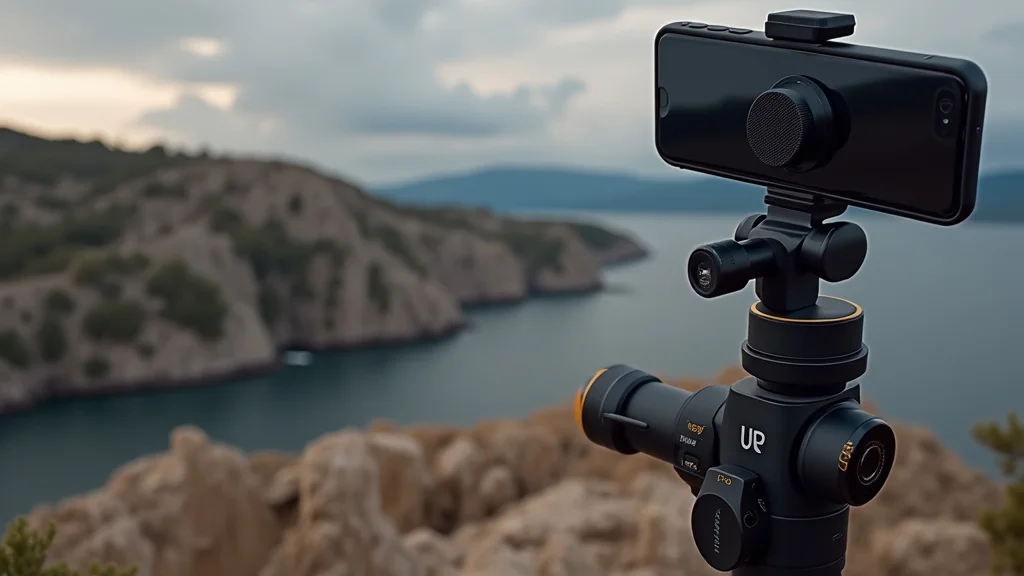
Picture this: you’re at a concert, trying to capture the energy of your favorite band, but your video is shaky and hard to watch. Or maybe you’re filming your kid’s soccer game, and the footage is a blurry mess. Frustrating, right? That’s where the DJI Osmo Mobile SE smartphone gimbal comes in. This guide will explore how this handheld stabilizer can transform your phone videos from shaky and amateurish to smooth and professional. We’ll explore its features, benefits, and show you how to get the most from your new cinematic companion, enhancing your video creation skills. By the end, you’ll be ready to create stunning footage, and improve your videos. Get ready to level up your content!
Key Takeaways
- The DJI Osmo Mobile SE smartphone gimbal provides exceptional stabilization for your phone videos.
- Learn about the features and how they enhance your creative capabilities.
- Discover how to master different shooting modes for diverse filming scenarios.
- Get tips on accessories that expand your filming potential.
- Understand the importance of the gimbal in the world of mobile videography.
- Explore how to make your videos visually appealing with minimal effort.
Unleash Your Creativity With the DJI Osmo Mobile SE
The DJI Osmo Mobile SE smartphone gimbal is more than just a stabilizer; it’s a tool that helps you create compelling stories through video. It is a handheld device that counteracts unwanted movement, allowing your smartphone to capture smooth, cinematic footage. This section will explore the essential components, design, and overall functionality of the Osmo Mobile SE, providing a comprehensive background on what makes this device special. It’s about simplifying the process of creating professional-looking videos, allowing you to focus on the content and narrative of your shots. Understanding the basics of the Osmo Mobile SE is the first step toward creating high-quality videos for various platforms, whether it’s for personal projects, social media, or professional use.
Core Components and Design
The design of the DJI Osmo Mobile SE smartphone gimbal is all about user-friendliness and portability. Weighing in at a size and weight that allows for easy handling, it is designed for comfortable use during extended filming sessions. The controls are intuitively placed for easy access, including buttons for recording, changing modes, and adjusting the gimbal’s movement. It typically has a foldable design, making it easy to store and carry. The build materials are a mix of durable plastics and metals, providing a good balance between weight and strength. This combination of features ensures the gimbal is both practical and resilient, capable of handling the demands of mobile filming.
- Gimbal Arms and Motors: These are the core components that provide stabilization. The motors counteract movements in three axes (pan, tilt, and roll), ensuring smooth footage. These motors are powerful, capable of rapidly adjusting to keep your phone level.
- Phone Clamp: The clamp securely holds your smartphone in place. It is typically adjustable to accommodate various phone sizes and may have rubber pads to prevent scratches.
- Control Panel: This panel is usually located on the handle and includes buttons for starting/stopping recording, changing shooting modes, and controlling the gimbal’s movement.
- Battery: The internal battery provides power for the gimbal. The battery life is an important consideration as it determines how long you can film before needing to recharge.
Key Features and Specifications
The DJI Osmo Mobile SE smartphone gimbal is packed with features designed to enhance your video creation experience. Each feature is designed to simplify the filmmaking process and improve the quality of your content. From its intelligent tracking capabilities to its creative modes, the Osmo Mobile SE offers a range of tools to help you create captivating footage. By mastering these key features, you’ll be able to unlock the full potential of your smartphone’s camera and create videos that stand out.
- ActiveTrack: This is an intelligent tracking feature that follows a subject, keeping them in the frame automatically. You can choose a person or object to track, and the gimbal will keep them in focus.
- Gesture Control: The Osmo Mobile SE allows you to start and stop recording or take photos using hand gestures. This is great for filming yourself or groups of people.
- Various Shooting Modes: The gimbal offers a variety of shooting modes, including panorama, time-lapse, and slow motion, giving you more creative control over your videos.
- Compact and Foldable Design: The Osmo Mobile SE is lightweight and folds up for easy portability.
- Compatibility: It is designed to work with most smartphones.
Exploring the Different Shooting Modes
One of the most exciting aspects of the DJI Osmo Mobile SE smartphone gimbal is its versatile shooting modes. Each mode offers a unique way to capture footage, providing you with a range of options to match your creative vision. Whether you’re looking to create a dramatic time-lapse, a smooth cinematic pan, or a dynamic tracking shot, the Osmo Mobile SE has the tools you need. This section will break down the various modes, explaining how each works and how to best utilize them for your projects. By learning the capabilities of each mode, you can elevate your video quality and create more professional-looking content.
Panorama Mode and Time-Lapse
Panorama mode lets you capture wide, detailed images, stitching together several shots to create a single, expansive photo. Time-lapse mode is a special feature that compresses time, creating a visually interesting sequence. With the Osmo Mobile SE, you can create time-lapses of cityscapes, sunsets, or any scene where changes happen slowly. The stabilization provided by the gimbal ensures that the time-lapse footage remains steady and professional-looking. This section looks at the Panorama mode, offering the ability to capture sweeping landscapes, and time-lapse mode, which is great for showing changes over a period.
- Panorama: The Osmo Mobile SE’s panorama mode helps capture wide landscapes. You start by selecting the mode in the app. The gimbal then guides you to capture each segment of the scene, typically by rotating automatically. The app stitches the individual shots together, producing a single, wide-angle image.
- Time-Lapse: Time-lapse mode lets you compress time. The Osmo Mobile SE’s app lets you set intervals for capturing frames. You might capture a frame every few seconds, minutes, or even hours. Then, the app creates a video that shows the scene’s changes over a much shorter time.
- Motion-Lapse: Motion-lapse combines the time-lapse technique with the movement of the gimbal. This lets you create dynamic shots. The gimbal moves smoothly during the time-lapse, adding a sense of motion.
- Hyperlapse: Hyperlapse is similar to a time-lapse, but the user moves the camera while filming. This is great for capturing movement. This mode allows you to create fast-moving sequences while keeping the footage stable.
Slow Motion and Sport Mode
Slow motion lets you capture fast-moving action in detail, making moments more dramatic. Sport mode is optimized for fast-paced action. It increases the responsiveness of the gimbal, allowing it to keep up with rapid movements. Whether you’re recording a sports game, capturing action shots, or adding artistic flair, slow motion and sport mode provide creative and practical options for enhancing your videos. Both modes work together to provide versatile filming options, ensuring that you can always capture the perfect shot, no matter the pace of the action.
- Slow Motion: The slow-motion mode allows you to record in higher frame rates. This enables you to play back footage at a slower speed. This is useful for capturing intricate details.
- Sport Mode: Sport mode increases the gimbal’s responsiveness. It lets the gimbal react quickly to sudden changes in movement. This mode is useful for action scenes.
- Understanding Frame Rates: To create slow-motion effects, you need to film at a higher frame rate (like 60 or 120 fps) and play it back at a lower frame rate (like 24 or 30 fps).
- Practical Applications: Slow motion is perfect for capturing sports highlights, dance moves, or any moment where you want to highlight detail. Sport mode ensures that the footage remains smooth even during fast-paced activity.
Enhancing Your Filmmaking With Accessories
While the DJI Osmo Mobile SE smartphone gimbal is a fantastic tool on its own, adding accessories can greatly enhance your filmmaking capabilities. These accessories can improve the quality of your footage and give you more creative options. From external microphones for better audio to tripods for more stable shots, each accessory serves a unique purpose. By exploring these options, you can expand your creative possibilities and create even more professional-looking videos. The right accessories can elevate your video projects, whether you’re a beginner or a seasoned filmmaker.
Essential Accessories for Mobile Filmmaking
Selecting the right accessories can drastically change the quality and style of your videos. These accessories provide support and added functions, giving you the ability to make more creative videos. This overview covers essentials to give you a full picture of the accessories available to improve your videos.
- External Microphone: The built-in microphone on your smartphone may not always capture the best audio. An external microphone can capture clearer audio. There are various types, including lavalier mics, shotgun mics, and wireless mics.
- Tripod: A tripod provides a stable base for your gimbal. This is essential for stationary shots and long time-lapses.
- LED Light: A portable LED light can add extra illumination to your shots. This is particularly useful in low-light conditions.
- Extension Rod: An extension rod allows you to get wider shots. This is especially good for group shots and capturing more of your surroundings.
Selecting and Using Accessories
Choosing the right accessories for your DJI Osmo Mobile SE smartphone gimbal can depend on the type of videos you want to create and your budget. Choosing the right accessories involves carefully considering each item’s impact. Learning how to properly use these accessories will help to ensure that you get the best possible results. This section will guide you through the process of selecting and using these accessories.
- Compatibility: Ensure that your accessories are compatible with your gimbal and your smartphone.
- Audio Quality: Always test your external microphone. You should listen to your recording to make sure it sounds good.
- Lighting: Experiment with different light sources to create different effects. Soft light is often better than harsh light.
- Tripod Placement: Position your tripod carefully to avoid obstructing your shot. Consider the height and angle.
- Extension Rod Techniques: Try using the extension rod for overhead shots or to get a wider perspective of a scene.
Troubleshooting Common Issues
Even with advanced technology, you may encounter issues with your DJI Osmo Mobile SE smartphone gimbal. Common problems, ranging from connectivity issues to motor glitches, can impact your filming experience. Knowing how to resolve these issues can save you time and frustration, and keep your creative process flowing. This section provides a guide to troubleshooting some common problems, helping you to quickly resolve issues and get back to capturing great footage.
Common Problems and Solutions
Several issues can arise during the use of the Osmo Mobile SE. Here’s a quick guide to some common problems and their solutions:
- Gimbal Not Turning On: Make sure the gimbal is charged. Try a different USB cable or power adapter.
- Connection Problems: Make sure Bluetooth is enabled on your phone. Restart your phone and the gimbal.
- Motor Overload: If the gimbal is struggling, check that your phone is not too heavy or out of balance. Recalibrate the gimbal.
- Unstable Footage: Recalibrate the gimbal, ensure that the phone clamp is secure, and check for any obstructions.
- App Issues: Try updating the DJI Mimo app. Restart the app.
Advanced Troubleshooting Techniques
If basic troubleshooting steps don’t resolve the problem, there are advanced steps you can take. These steps may require more in-depth knowledge of the device, but can often fix more complex issues.
- Firmware Updates: Keep your gimbal’s firmware and the app updated to the latest versions. These updates often include bug fixes and performance improvements.
- Gimbal Calibration: If the gimbal is not level, you can recalibrate it in the settings. This process helps the motors find their correct balance.
- Factory Reset: If problems continue, consider resetting the gimbal to its factory settings. This will erase all your settings.
- Contact Support: If all else fails, reach out to DJI support for professional advice. Provide them with detailed information about the problem.
Common Myths Debunked
Myth 1: Smartphone Gimbals Are Only for Professionals
Many think that smartphone gimbals like the DJI Osmo Mobile SE smartphone gimbal are only for experienced filmmakers. That’s not completely true. While professionals certainly use them, they’re also designed for beginners. The user-friendly design and automatic features make it easy for anyone to create smooth, stable videos, regardless of their skill level. With simple controls and various automated modes, the gimbal is accessible, allowing new users to create professional-looking videos.
Myth 2: Gimbal Footage Is Always Perfect
Some people believe that using a gimbal automatically guarantees perfect footage. While the DJI Osmo Mobile SE smartphone gimbal provides incredible stabilization, it’s not a magic bullet. Other factors, like good lighting, proper framing, and compelling storytelling, also contribute to a great video. Using a gimbal simply means that you can control stability and you still need the skills of a good video maker.
Myth 3: All Gimbals Are the Same
Another misconception is that all gimbals are created equal. Different gimbals offer various features, build quality, and capabilities. While they all aim to stabilize your phone, some gimbals offer advanced features. Comparing each gimbal will help you decide which one works best for you and your project.
Myth 4: Gimbals Are Too Complicated to Use
Many believe that these devices are complex and difficult to use. That’s not the case with the DJI Osmo Mobile SE smartphone gimbal. With its user-friendly design and intuitive controls, it’s easy to pick up and start using right away. Most gimbals come with tutorials and guides that will help users learn how to make videos.
Myth 5: Gimbals Are Only for Video, Not Photos
While the main use of a gimbal is video, the DJI Osmo Mobile SE smartphone gimbal can improve the quality of your photos. Using a gimbal can provide stabilization to a photo, allowing you to create sharp and detailed images, especially in low-light situations. Additionally, features like panorama mode can enhance your images.
Frequently Asked Questions
Question: Can I use the DJI Osmo Mobile SE with any smartphone?
Answer: The DJI Osmo Mobile SE smartphone gimbal is designed to work with most smartphones, but it’s important to check the compatibility list on the DJI website to make sure your phone is supported. Check for the phone’s weight and dimensions.
Question: How long does the battery last on the Osmo Mobile SE?
Answer: The battery life varies. Typically, the DJI Osmo Mobile SE smartphone gimbal can last up to 8 hours on a single charge. However, continuous use of certain features, like ActiveTrack, can affect battery duration.
Question: What’s the best way to clean my Osmo Mobile SE?
Answer: Use a soft, dry cloth to clean the DJI Osmo Mobile SE smartphone gimbal. Avoid using liquids or harsh chemicals, as they may damage the device. Keep the device safe from water, dust, and temperature changes.
Question: Can I use the Osmo Mobile SE in the rain?
Answer: The DJI Osmo Mobile SE smartphone gimbal is not waterproof. Avoid using it in the rain or any wet environment to prevent damage. Be sure to protect it from moisture and water.
Question: Does the Osmo Mobile SE come with a warranty?
Answer: Yes, the DJI Osmo Mobile SE smartphone gimbal typically comes with a limited warranty. The warranty’s duration and coverage vary depending on the region and the retailer. Review the warranty details when you purchase your gimbal.
Final Thoughts
The DJI Osmo Mobile SE smartphone gimbal can transform your mobile videography and enhance your creative expression. From its compact design and ease of use to its advanced stabilization and smart features, the Osmo Mobile SE empowers anyone to create professional-quality videos. You now understand how to set up the gimbal, use the different shooting modes, and use various accessories to make your videos stand out. The ability to create amazing video starts with understanding the basic functions of the gimbal, and expanding your knowledge to use extra tools. You are now ready to make more creative and compelling videos, and share them with the world. Embrace the possibilities, and enjoy the adventure of mobile filmmaking.